Jesse
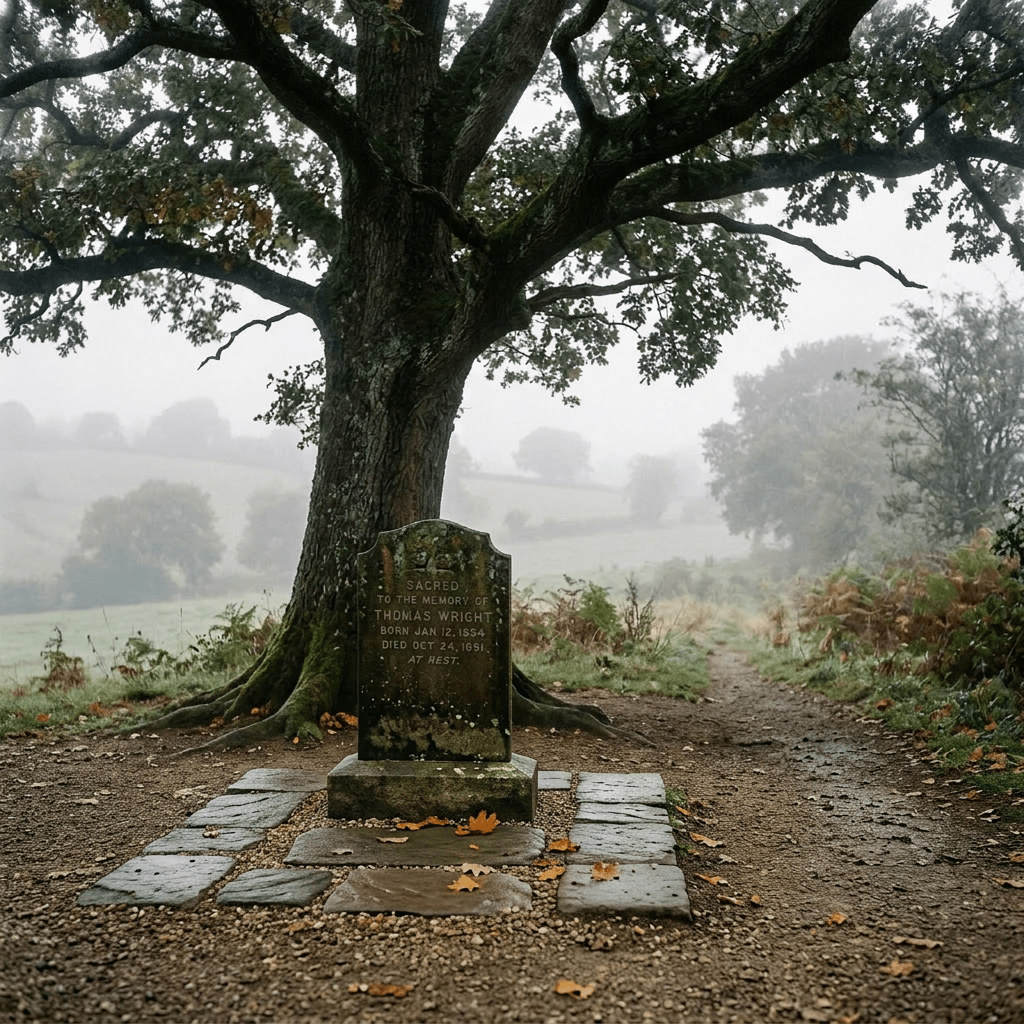
My Aunt Jesse died long before I was born. She is now a name and dates on a tombstone in the cemetery at Black Creek Baptist Church, Bryan County.
Jesse Stephens Land
Jul. 14, 1911 – Oct. 26, 1934
It is unlikely that there remain any who recalls her face or her voice. Her sisters and brothers, cousins, friends, all, are long dead. Jesse is among the ranks of those Thomas Hardy called the Forgotten,
“They bide as quite forgot;
They are as men who have existed not;
But what has been will be –
First memory, then oblivion’s swallowing sea;
Like men foregone, shall we merge into those
Whose story no one knows…….”
She died young. There are different stories concerning the cause of her death. According to my mother it came as a result of a fall from a horse. Her husband, C. L. Land, was a timber cruiser in South Carolina who appraised the timber from horseback, to cover more ground in days before ATVs. Sometimes she would ride with him. One day was thrown from her horse and died from internal hemorrhage. I’ve also heard that she suffered a ruptured appendix, dangerous now, often fatal in 1934, especially if you lived out in the country.
I have seen her in a photo leaning against a tree, the same dark hair and eyes of her three sisters, the gleeful, expectant smile of a happy young woman. Her letters reveal a lively, active and popular girl, a dance partner sought by ‘those Savannah boys’ who clamored for her attention. One of them was clearly smitten, sending a stream of letters from his home in Valdosta. “Jesse my love,” writes Gary Reddick, “How I miss your smile.” “Do the Morgans still have those warm affairs and invite the Savannah boys out? You know that is where I first saw you. Now isn’t that too wonderful for words?” He writes of sitting alone in a movie, a talkie he tells her, wishing she were sitting by his side. Letter after letter he writes. And then, a note of desperation, “I look daily for your letters, Jesse. Please write and put my heart at ease.” This she declined to do. Another caught her gaze, her affection, and her hand.
She moved away to South Carolina with C.L Land, seventy miles from her home. As portrayed in letters home, C. was a good husband. She always referred to him as C. Clearly, she was very much in love. “Ma, he is so sweet to me. He came back from out in the country with a big bucket of fresh flowers. I have them on the kitchen table. Black Eyes Susan’s.” They moved into a little house in Brunson, South Carolina, not far from his mother’s home. “My little house is coming along fine, Ma. It has canna lilies by the back door.”
Her letters home are all happiness and excitement about her new life. “Dear Ma,” she writes, “went shopping in Savannah and picked out the most beautiful sofa. We bought it on time but I’m sure we can pay the rest really soon. We had a swell time.” “Ma, you should see your girl now, walking up the steps in Columbia to a ball at the capital. I met the governor! I wore my new dress. C says it looks really good on me. Uncle Billy said he felt mighty proud of me.” “We went to a terrific movie, ‘The Girl from Missouri’ and it was simply grand. C told me he thinks I’m much prettier than Jean Harlow. Ha.”
She kept house and visited C’s mother, spending her days fixing up the house and yard. “I don’t think my little yard will be as pretty as yours,” she wrote, “but I’m making the best I can.” “We have a radio and record player. C brought me a copy of ‘I Only Have Eyes for You.’ Here’s a song just right for you darling, he said. I had to laugh. We played it over and over.” It appears that the affection was shared by the two of them. He pined for her when she visited for a few days back in Pembroke. “Say young lady have you forgotten me or have you been so busy you couldn’t write? Precious I sure have missed you.”
She was close to her mother and sisters, always adding a note to tell Louise she had asked about her. “I miss her so,” she wrote. She appeared to worry about Dot, doubtless a continuing saga. “How is Dot doing Ma? Better, I hope.” “Looking forward to seeing you next month. I cannot wait. Tell Louise I will send a telegraph when I know the time to pick me up. Love Jess.”
And then she was gone. When I was young, I went with my mother, my Aunt Louise, Aunt Dot, and my grandmother to clean up around the grave. An old custom. It was surrounded by azalea and spiraea back then. They would talk a little about her, never about her death, small talk: how excited she would get about a dance, some new boy she met, her job, a new dress. “Remember when Uncle Lint taught her to drive? I don’t think he ever got over it.”
I don’t recall that my mother ever spoke to me about Jesse. Louise, the oldest sister, once mentioned that Jesse had a sweet voice, but all the girls could sing. They had sung together during the war at the Brass Rail out on Tybee, my mother, Dot, Louise, and Maida Geiger, a friend from Lanier. The dance floor a blur of couples, arms around one another, swaying in place to the music, a walk along the beach at the end of an evening, the sound of laughter from across the sand, rum and coke, a moment to last, must last, forever. And up on stage the quartet singing a Rogers and Hart tune with all the uncertainty, hope, and fear, even the wonder of those years….
‘It seems we stood and talked like this before,
We looked at each other in the same way then,
But I can’t remember where or when….’
Hold tight darling, there’s a war going on, and I may never see you again.
My mother and her sisters sang those songs sitting on a swing on the front porch. Their voices like a sigh, the sound of evening, blending with the shadows in the trees. It is interesting how melodies heard so long ago register in our memories in perhaps our first experience of time: an ordering of moments on the downbeat. When I was young, I heard them do excellent renditions of Jo Stafford’s ‘Long Ago and Far Away,’ The Mills Brothers ‘Paper Doll,’ and ‘Straighten Up and Fly Right,’ an Andrews Sisters tune. Whenever they came to the line “cool down daddy don’t you blow your top” Dot would make the popping noise you get when you put your little finger in your mouth and then pop it out. But Dot was always a character. “How’s Dot,” Jesse had written thirty years earlier. “Better, I hope.”
I stop by her grave as often as I can, sometimes take a brush and a bucket and scrub off the stone, a simple slab sinking slowly into the sand. Dot had wanted to have her moved to the family plot in Pembroke. Mama and Louise wanted to leave her there in Black Creek. And there she remains. C.L. remained at her graveside after the burial, stayed all night. The following morning he drove up the hill to McCellvens’s store, bought a coke and crackers, drove away, never to be heard from again. Ninety years have come and gone, the rumble of countless thunder storms unheard in the skies above her, winter rains beating down on her grave, her memory, like Scott Fitzgerald’s boat, borne back ceaselessly into the past.
 Home Is Where You Come From
Leave a comment